Why Is Toilet Running Constantly? Causes and Fixes
A toilet that refills every few minutes can be easy to ignore at first. But if you are asking, “why is toilet running constantly,” the answer is usually that water is leaking from the tank into the bowl or escaping through an overflow. That wasted water can add up quickly on a utility bill, and a small internal toilet problem can become a bigger repair if the components are worn, corroded, or improperly adjusted.
The good news is that a running toilet is often repairable without replacing the entire fixture. The key is identifying where the water is going and knowing when a simple adjustment is reasonable versus when it is time to call a licensed plumber.
Why Is a Toilet Running Constantly?
A toilet tank holds water until you flush. After the flush, the fill valve refills the tank and the flapper or flush valve seals the opening at the bottom. When that seal does not hold, or when the tank fills too high, the toilet keeps trying to replace water that should have stayed put.
In most homes and commercial restrooms, the problem comes down to one of three parts: the flapper, the fill valve, or the overflow tube. These components work together, so one worn or poorly adjusted part can create a steady trickle, an occasional refill cycle, or a continuous hissing sound.
A worn or misaligned flapper
The flapper is the rubber seal at the bottom of the tank. It lifts when you flush and should settle back into place once the bowl has emptied. Over time, rubber can harden, warp, collect mineral buildup, or simply stop sealing tightly against the flush valve seat.
When the flapper leaks, tank water slowly enters the bowl. The water level in the tank drops, the fill valve turns on, and the toilet refills. This cycle may happen every few minutes, even when nobody has used the toilet.
A flapper can also fail to close properly if its chain is too short, tangled, or caught under the seal. If the chain has too much slack, it may not lift the flapper fully during a flush. The right adjustment depends on the toilet model, so forcing the chain or using an incorrectly sized replacement can create another issue.
A fill valve that will not shut off
The fill valve controls the water entering the tank after a flush. If it is worn or blocked by sediment, it may continue running after the tank has reached the proper level. You may hear a persistent hissing sound near the water supply connection inside the tank.
Some fill valves use a float cup that moves up with the water level. Others use a float arm. If the float is set too high, damaged, or sticking, the valve may not close when it should. In older toilets, the valve assembly may be nearing the end of its service life and replacement is often more reliable than repeated adjustments.
Water flowing into the overflow tube
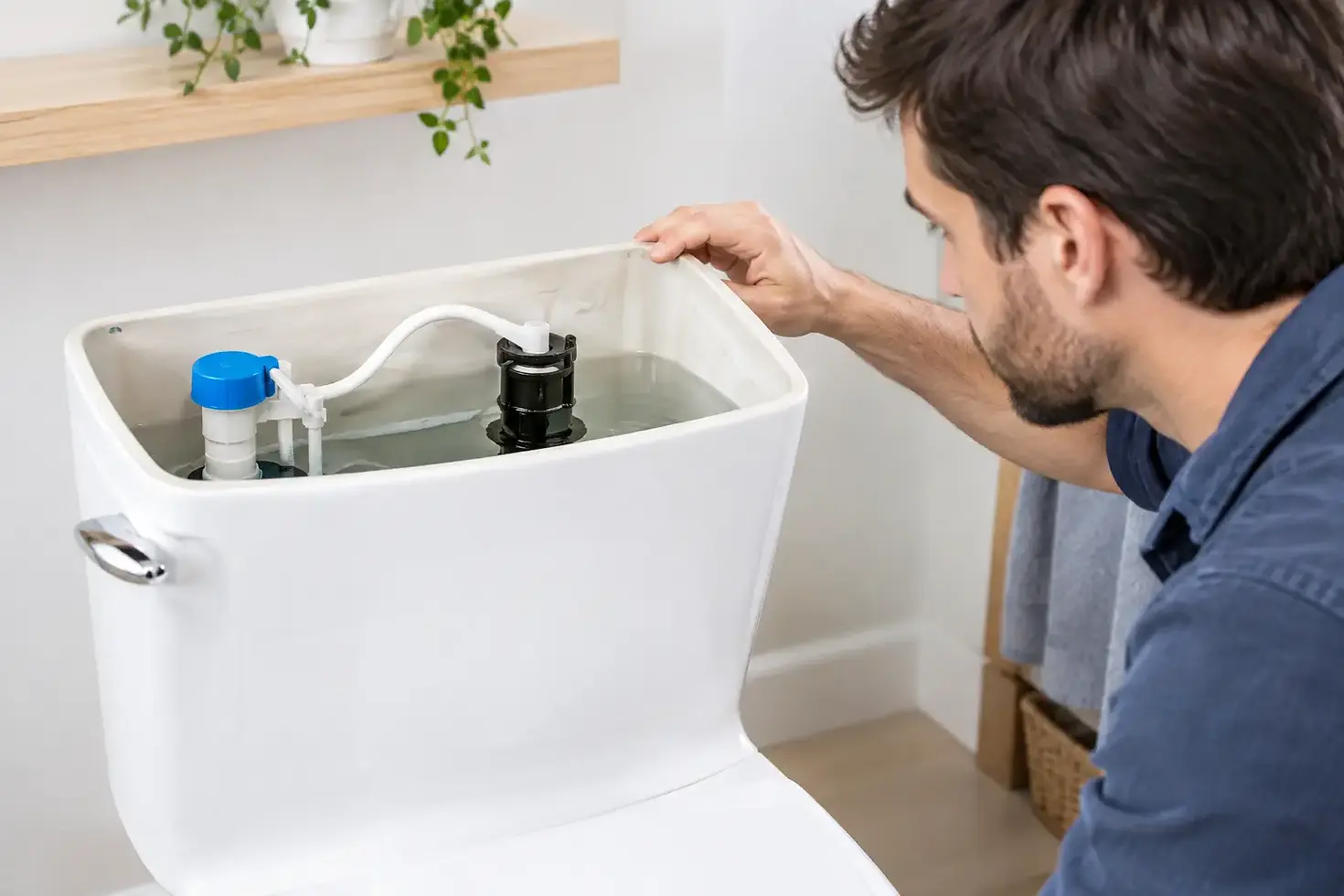
Look inside the tank for the vertical open tube near the center. This is the overflow tube. It is designed to send excess water safely into the bowl if the tank level rises too high.
If you see water continuously flowing into that tube, the tank is overfilling. The fill valve or float setting is usually the cause. While the overflow helps prevent water from spilling onto the bathroom floor, it does not stop water waste. The toilet can continue using water around the clock.
A cracked overflow tube or faulty flush valve
Not every leak is caused by the flapper itself. The flush valve seat underneath it can become damaged, and the overflow tube may crack at its base. These problems allow water to escape from the tank even if a new flapper appears to be working.
This is where a quick do-it-yourself fix can become frustrating. A cracked or failed flush valve often requires removing the tank from the bowl to replace the assembly correctly. On older toilets, corroded bolts or brittle parts can make the job more complicated and increase the risk of a leak after reassembly.
A Simple Check You Can Do Safely
Before scheduling service, you can perform a basic inspection without taking the toilet apart. Remove the tank lid carefully and set it on a stable surface. Porcelain lids can crack easily.
Flush once, then watch how the tank refills. If water rises above the marked fill line or pours into the overflow tube, the fill valve needs attention. If the tank fills to a normal level, becomes quiet, and then starts refilling later, the flapper or flush valve is more likely leaking.
A dye test can help confirm an internal leak. Add a few drops of food coloring to the tank water and do not flush for 15 to 20 minutes. If color appears in the bowl, water is passing through the flapper or flush valve seal.
Do not use chemical drain cleaners, adhesives, or makeshift weights inside the tank. These shortcuts can damage components, interfere with the flush, and make a professional repair more difficult. If you see a cracked tank, water on the floor, loose supply connections, or corrosion around the base of the toilet, stop troubleshooting and arrange service.
How to Limit Water Waste Until It Is Repaired
If the toilet will not stop running, turn the shutoff valve clockwise. It is usually located on the wall or floor behind the toilet near the supply line. This stops water from entering the tank and prevents unnecessary waste while you wait for repairs.
You can still use the toilet carefully by turning the water back on only when needed, allowing the tank to fill, flushing, and shutting the valve off again afterward. This is only a temporary measure. Avoid forcing a stuck shutoff valve, especially in an older Staten Island home where valves may be corroded or fragile. A broken valve can turn a toilet repair into an active leak.
For a business, rental property, or busy household, shutting off a frequently used toilet may not be practical. Prompt repair is usually the better choice because it restores reliable operation and avoids disruption for tenants, customers, or family members.
When to Call a Plumber for a Constantly Running Toilet
Replacing a standard flapper may be straightforward when the problem is clearly visible and the toilet is otherwise in good condition. However, calling a professional is the safer decision when the cause is uncertain or the fixture has more than one issue.
A plumber can diagnose the leak, verify that the correct replacement parts are being used, inspect the shutoff valve and supply connection, and test the toilet after the repair. That matters because toilets are not all built the same. A universal part may fit loosely, a high-efficiency toilet may need a specific seal, and a fill valve adjustment that seems minor can affect flushing performance.
Professional service is especially worthwhile if you notice any of the following:
The toilet runs continuously after adjusting or replacing the flapper.
Water is leaking onto the floor, around the tank bolts, or near the base.
The shutoff valve does not work properly or the supply line is corroded.
The toilet rocks, flushes weakly, clogs often, or has visible cracks.
These signs can point to issues beyond a simple internal tank repair. A loose toilet, for example, may affect the seal at the floor and should not be ignored.
Protect Your Water Bill and Your Property
A constantly running toilet may seem like a minor annoyance, but it is one of the most common sources of hidden water waste in a property. The longer it continues, the more it can cost and the greater the chance that worn parts, failing valves, or a hidden leak will cause additional problems.
If a quick inspection does not clearly reveal a simple flapper issue, go with a professional. JV Mechanical provides responsive plumbing repairs for Staten Island homeowners, landlords, and businesses that need a dependable solution without unnecessary guesswork. A properly repaired toilet should fill, stop, and stay quiet - exactly the way it should.

Comments