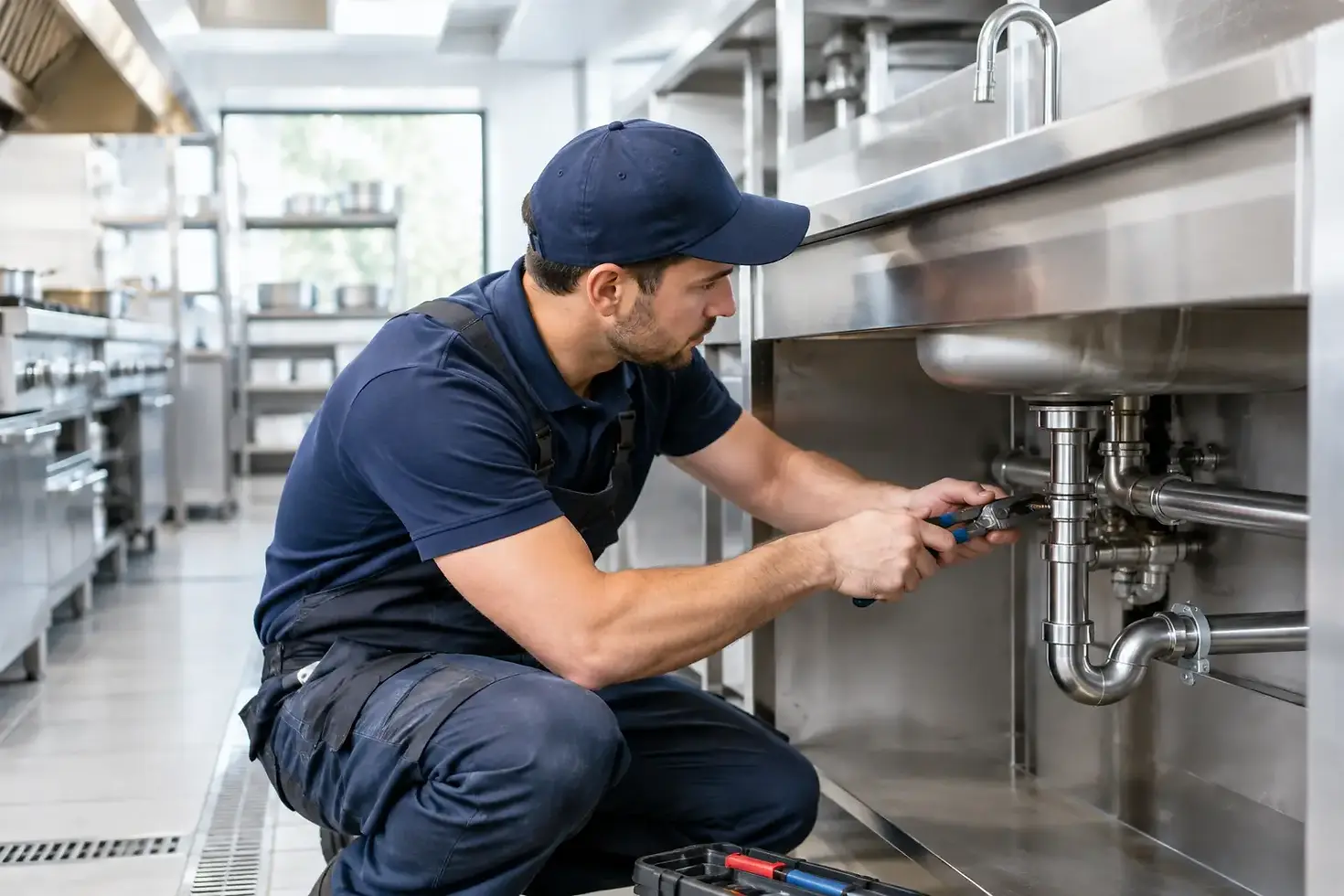
Commercial Kitchen Plumbing Guide for Owners
A backed-up floor drain during a busy dinner rush is not a minor inconvenience. It can stop food prep, create slip hazards, put sanitation at risk, and cost a restaurant real revenue. This commercial kitchen plumbing guide helps restaurant owners, managers, and property decision-makers understand what needs professional attention before a small plumbing issue becomes a shutdown.
Commercial kitchens put far more demand on plumbing systems than a typical home. Grease, food scraps, high-temperature water, frequent handwashing, dishwashing equipment, and constant use all work against drains, fixtures, and supply lines. A dependable maintenance plan and fast response when something goes wrong protect both your operation and your customers.
The Commercial Kitchen Plumbing Systems That Matter Most
A commercial kitchen has several connected systems, and a problem in one can affect the rest. Drains are often the first concern because they handle the daily load from prep sinks, three-compartment sinks, dish areas, floor drains, and sometimes equipment discharge.
Drain lines must move wastewater quickly without allowing backups, odors, or standing water. Slow drains are an early warning sign, not something to work around. In a kitchen, repeated slow drainage may point to grease buildup, food debris, a partial blockage farther down the line, or a drain line with an underlying condition that needs inspection.
Water supply is just as critical. Kitchens need consistent hot and cold water for handwashing, cleaning, cooking, and dishwashing. A leaking supply line, weak water pressure, failed shutoff valve, or unreliable water heater can disrupt service immediately. Since many kitchens operate during peak hours when repairs are especially difficult, prompt professional diagnosis matters.
Floor drains deserve particular attention. They are your first line of defense when water spills or equipment overflows, but only if they are open and draining properly. A blocked floor drain can turn a manageable leak into a larger cleanup, safety, and property-damage issue.
Grease Traps and Interceptors Need Regular Service
Grease is one of the most common reasons commercial kitchen drains fail. Fats, oils, and grease may look harmless when they are warm, but they cool and cling to pipe walls. Over time, that buildup narrows the drain line and creates stubborn blockages.
A grease trap or grease interceptor is designed to capture much of this material before it enters the wastewater system. It is not a device you can install and forget. When the unit becomes overloaded, grease can pass downstream, cause odors, slow drainage, and contribute to a backup.
The correct cleaning schedule depends on the kitchen's volume, menu, equipment, and local requirements. A high-volume restaurant frying food every day will usually need more frequent attention than a small cafe with limited food preparation. Regular service is less disruptive and usually less expensive than responding to a sewage backup during operating hours.
Kitchen staff can help by keeping food scraps and oil out of sinks, but good habits do not replace professional maintenance. Never rely on hot water or chemical drain cleaners to solve grease buildup. Hot water may move grease farther down the line before it hardens, while harsh chemicals can damage piping and create unsafe conditions for employees.
Why Commercial Kitchen Drains Back Up
Drain backups rarely happen without warning. The signs may begin with gurgling sounds, a recurring odor near a floor drain, water taking longer to drain, or water appearing in an unexpected fixture. For example, running a sink and seeing water rise in a nearby floor drain often means the line is restricted downstream.
Common causes include grease accumulation, food particles, coffee grounds, broken or deteriorated piping, improper drain slope, tree-root intrusion in exterior lines, and an overloaded main sewer connection. The right repair depends on the cause. Clearing a blockage may restore flow, but a camera inspection can be the better long-term choice when backups keep returning.
A professional plumber can determine whether the issue is limited to one fixture, affects a branch line, or involves the building's main sewer. That distinction matters because recurring drain cleaning without identifying the underlying problem can lead to repeated service interruptions and unnecessary expense.
Water Heaters, Backflow, and Essential Fixtures
Hot water is a working utility in a commercial kitchen. If the water heater cannot keep pace, dishwashing and sanitation procedures can be affected. Signs of trouble include inconsistent temperatures, rusty water, unusual noises, visible leakage, rising utility costs, or a unit that runs continuously without delivering dependable hot water.
The right water-heating setup depends on the size of the kitchen, hours of operation, peak demand, and equipment requirements. A unit that is too small may work adequately during slow periods but fail during the lunch or dinner rush. A qualified plumber can evaluate capacity, connections, venting where applicable, and the condition of valves and supply lines.
Backflow prevention is another area that should not be overlooked. Commercial kitchens often use equipment and connections that need protection from contaminated water flowing back into the clean water supply. Testing, repair, and installation requirements can vary by property and local code. When questions arise, bring in a licensed professional who understands commercial plumbing work in New York City.
Hand sinks, faucet assemblies, spray hoses, pre-rinse units, and shutoff valves also need regular attention. A loose faucet may seem manageable, but ongoing leaks waste water and can damage cabinets, walls, and flooring. A shutoff valve that does not work can turn a simple fixture repair into a larger emergency.
A Practical Commercial Kitchen Plumbing Maintenance Plan
The most effective maintenance plan is based on how your kitchen operates. A full-service restaurant, bakery, deli, catering operation, and small coffee shop do not put the same stress on their plumbing. Still, every commercial kitchen benefits from consistent observation and scheduled service.
Staff should report slow drains, sewer-like odors, leaking fixtures, water pressure changes, and unusual sounds as soon as they appear. Waiting until water is on the floor usually limits your repair options. Managers should also know where the main water shutoff is located and make sure it remains accessible.
For most operations, professional drain maintenance should be scheduled before the busiest season, not after the first backup. Grease trap service should follow the actual volume of grease your kitchen produces. Water heaters, supply connections, valves, and visible drain piping should be inspected on a routine basis, particularly in older buildings where prior repairs may have left behind weak points.
Keep a simple record of drain cleaning, grease service, repairs, and recurring symptoms. This helps a plumber identify patterns and gives you a clearer picture of which systems may need repair, replacement, or more frequent maintenance.
When to Call a Commercial Plumber Right Away
Some issues cannot wait until the next available appointment. Call for professional help promptly when sewage or wastewater backs up, a major water line leaks, a floor drain overflows, hot water fails during business hours, or you smell gas near water-heating equipment. Protect employees and customers by keeping people away from contaminated water and wet areas until the problem is addressed.
If possible, stop using the affected fixture or equipment. Do not keep running water in hopes that the backup will clear. If a leak is active and you can safely access the local shutoff valve, turn off the water supply. Then let a licensed, insured plumbing professional assess the situation and make the appropriate repair.
For Staten Island restaurant owners and commercial property managers, a responsive local plumber can make a meaningful difference when a kitchen problem threatens service. JV Mechanical provides professional commercial plumbing support with straightforward communication, so you can focus on getting your operation back to normal.
A well-run kitchen depends on plumbing that works quietly in the background. Address the warning signs early, keep maintenance consistent, and have a qualified professional ready before the next busy shift puts your system to the test.



Comments