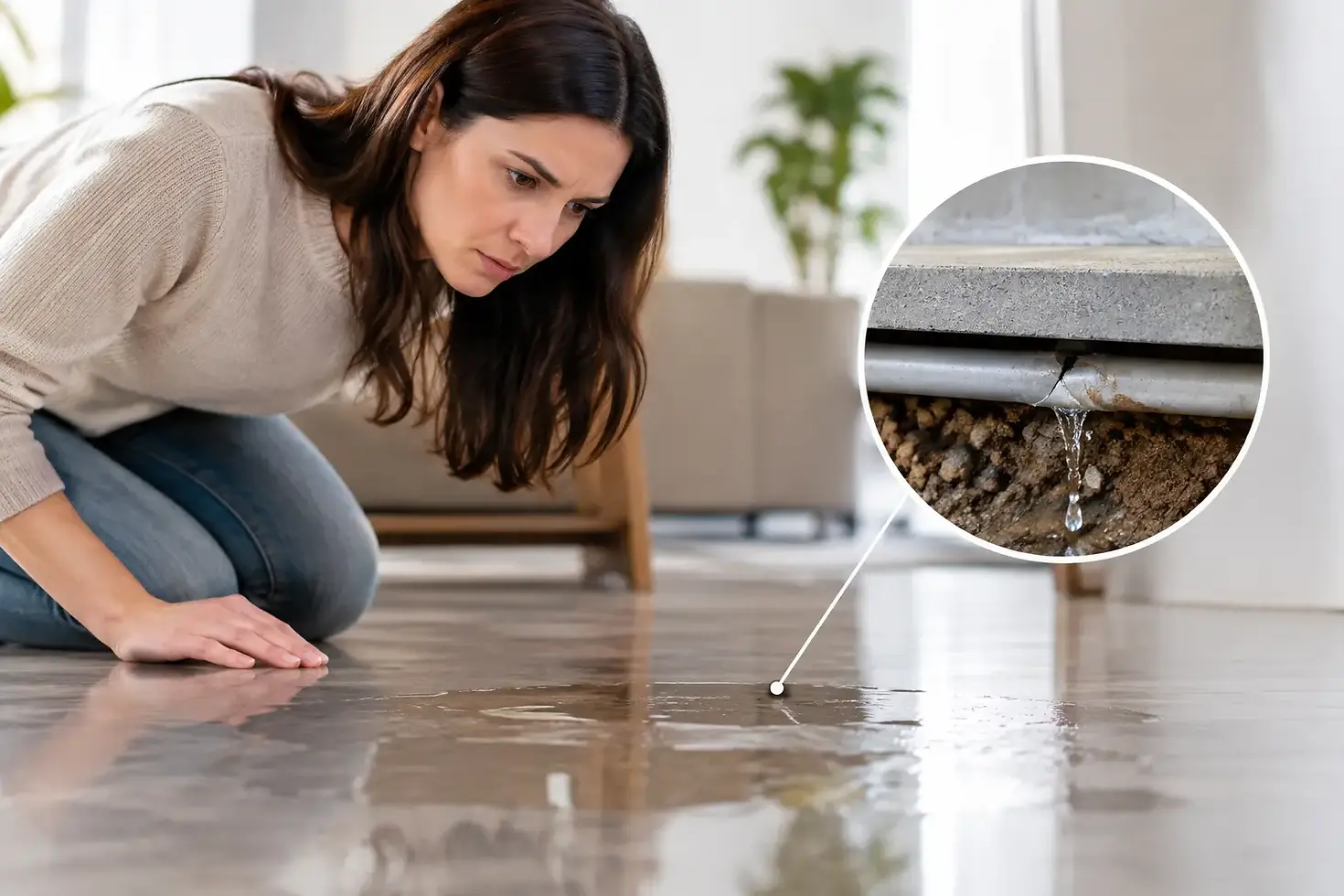
Five Signs of Slab Leaks You Should Not Ignore
A slab leak rarely announces itself with a dramatic burst pipe. More often, it starts beneath a concrete foundation and leaves small clues upstairs: a warm patch of floor, a water bill that suddenly climbs, or the quiet sound of water moving when every fixture is off. Knowing the five signs of slab leaks can help you act before a hidden plumbing problem leads to damaged flooring, mold concerns, or foundation-related repairs.
A slab leak is a leak in a water or drain line located beneath a concrete slab. Because the pipe is out of sight, the water may travel before it becomes visible. That makes prompt professional diagnosis especially valuable. The goal is not to guess where the leak is - it is to locate it accurately, limit disruption, and repair the cause.
Five Signs of Slab Leaks to Watch For
1. Your water bill rises without a clear reason
An unexplained increase in water use is one of the most common warnings of a hidden leak. If your household or business has not changed its normal routines, but the bill is noticeably higher than usual, water may be escaping from a pressurized line beneath the slab.
A running toilet, dripping faucet, or irrigation issue can also increase water usage, so a higher bill does not automatically mean there is a slab leak. Still, it deserves attention, particularly when it appears alongside another warning sign. A licensed plumber can inspect visible fixtures, check the plumbing system, and help determine whether the issue is under the foundation or elsewhere on the property.
2. You hear water running when nothing is on
Turn off faucets, appliances that use water, and fixtures throughout the building. If you still hear a faint rushing, hissing, or flowing sound in the floor or walls, it may point to an active leak.
This sign is more meaningful with a hot-water line leak, which can sometimes create a steady sound and waste energy as well as water. Quiet homes may make the noise easier to notice late at night, while a commercial property may only reveal it during off-hours. Do not break open flooring based on sound alone. Professional leak detection helps confirm the source before any repair work begins.
3. Parts of the floor feel warm, damp, or unusually cold
A warm area on tile, vinyl, or concrete flooring can be a strong indication of a hot-water line leak under the slab. The spot may feel noticeably different from the surrounding floor, even when the heat is not running. In other situations, you may notice damp carpet, warped flooring, loose tiles, or an area that stays cool and clammy.
Flooring materials react differently to moisture. Hardwood may cup or separate at the seams, while laminate can swell at the edges. Tile can loosen as the materials below it shift or retain moisture. A damp spot is not always caused by a slab leak - it could be a spill, an appliance line, or moisture entering from outside - but persistent changes need a qualified inspection.
4. There is moisture, staining, or mold along walls and baseboards
Water from beneath a slab does not always come up through the middle of a room. It can move through the soil, travel along structural materials, or appear at the edges of a floor. You may see darkened baseboards, peeling paint, discolored drywall, or a musty odor near a wall.
Mold and mildew need moisture to grow, so recurring odor or visible growth should never be covered up and ignored. The affected area may be near the leak, but it may not be directly above it. Finding the actual source matters because drying the surface without stopping the leak leaves the property vulnerable to continued damage.
5. Your water heater runs more often or hot water becomes inconsistent
A leak in a hot-water line beneath the slab sends heated water into the ground instead of to your faucets. As a result, your water heater may run more frequently, utility costs may rise, and hot water may seem less reliable than usual.
This symptom can overlap with water heater problems, such as a failing heating element, sediment buildup, or an aging unit. That is why it helps to have the full plumbing system evaluated rather than replacing equipment based on one symptom. When the issue is a slab leak, addressing the line can prevent ongoing energy and water waste.
Why Waiting Can Make a Hidden Leak More Expensive
Small leaks beneath a slab can continue for days or weeks without creating a visible puddle. During that time, water can saturate materials under the floor, affect finished surfaces, and create conditions that support mold growth. The longer water moves where it should not, the more complicated cleanup and restoration can become.
There can also be structural concerns. Soil beneath a slab may shift or wash away in some cases, which can contribute to cracking or movement. Not every slab leak causes foundation damage, and the risk depends on the leak size, pipe location, soil conditions, and how long the problem has been active. It is still a risk worth taking seriously, particularly when you notice cracks paired with other leak symptoms.
For landlords and business owners, a hidden leak can create another challenge: disruption. Wet flooring, restricted areas, tenant complaints, or interrupted operations can quickly turn a plumbing repair into a larger property-management issue. Early detection gives you more options and may reduce the scope of the repair.
What a Professional Slab Leak Inspection Involves
A proper diagnosis should start with evidence, not assumptions. A plumber may review your water usage, inspect accessible plumbing, test the system, and use leak-location methods to narrow down the source. The best repair approach depends on the pipe material, the leak location, the condition of the rest of the line, and access to the affected area.
Sometimes a targeted repair is appropriate. In other cases, rerouting a section of pipe may make more sense than opening a large portion of the floor. There is no one repair method that is right for every property. A professional should explain the findings, discuss the available options, and provide a clear estimate before work begins.
Avoid relying on temporary sealants or simply turning up the heat to dry a damp floor. Those steps may hide symptoms, but they do not stop an active line from leaking. If water is visible, shut off the water supply if it is safe to do so and arrange service as soon as possible. If the leak is near electrical equipment or causes significant flooding, treat it as an emergency.
When to Call for Help
Call a plumber promptly when two or more of these signs appear together, such as a higher water bill and a warm floor, or running-water sounds and damp baseboards. You should also schedule an inspection if you see persistent moisture with no obvious source, even if the water seems minor.
For Staten Island homeowners, property managers, and business owners, JV Mechanical provides professional plumbing service focused on finding the problem and protecting the property. A licensed and insured plumber can help you move from uncertainty to a practical repair plan without unnecessary delay.
Hidden water does not get better on its own. Paying attention to the first unusual change in your floors, water use, or indoor moisture can protect your property and give you a better chance of resolving the issue before it spreads.



Comments