Apartment Leak Restoration: What Happens Next
A leak in an apartment is rarely contained to one room. Water can travel behind walls, through ceilings, under flooring, and into the unit below before the full extent of the problem is visible. Fast apartment leak restoration starts with stopping the source, protecting the property, and getting the right professionals involved before a small plumbing issue becomes a larger repair.
For tenants, owners, landlords, and property managers, the first priority is not guessing where the water came from. It is taking control of the situation safely and documenting what happened. A licensed plumber can identify the plumbing failure, make the needed repair, and help provide clarity about the next steps for drying and restoration.
First Steps When Water Is Leaking in an Apartment
If water is actively flowing from a pipe, fixture, ceiling, or wall, act quickly. Shut off the local water supply if you can safely identify it. For a leaking toilet, sink, or washing machine connection, the nearby shutoff valve may stop the flow. If the source is unclear or water is spreading quickly, the building's main water supply may need to be shut off by maintenance or a qualified plumber.
Move electronics, rugs, furniture, and valuables away from the affected area when it is safe to do so. Do not enter standing water near outlets, appliances, or electrical panels. If water is coming through a ceiling, avoid standing beneath bulging drywall or a visibly sagging ceiling. Those materials can become unstable when saturated.
Take clear photos and videos of the leak, visible water, damaged belongings, and affected rooms. This record can help the building owner, management company, insurance carrier, and repair professionals understand the timeline and scope of the damage. Then notify the appropriate parties right away. In a co-op, condo, or rental building, that commonly means building management, the super, or the property owner.
The Difference Between Leak Repair and Restoration
A plumbing repair and water damage restoration are connected, but they are not the same service. The plumbing repair stops the cause of the water intrusion. Restoration addresses the effects the water has had on walls, floors, ceilings, insulation, cabinets, and contents.
For example, a failed supply line under a kitchen sink may be repaired in an hour, but water that has soaked the cabinet base, subfloor, or ceiling below may require drying equipment, material removal, cleaning, and later reconstruction. Trying to restore finishes before the plumbing source is corrected can lead to repeated damage and unnecessary cost.
A professional response generally follows a practical order: stop the water, find the source, repair the plumbing, assess the affected materials, dry the area, and then complete repairs to finishes as needed. The exact process depends on how long the leak was active, the amount of water involved, and whether water reached neighboring apartments or common areas.
Common Causes of Apartment Water Damage
Apartment leaks can begin inside a unit, in the unit above, or within a shared building system. A visible ceiling leak does not always mean the pipe directly above that spot is the source. Water often follows framing, pipes, and gravity before it appears.
Common causes include worn toilet components, overflowing fixtures, damaged supply hoses, leaking shutoff valves, failed dishwasher or washing machine connections, drain backups, aging pipe joints, and water heater problems. In older New York City buildings, hidden piping and long-term wear can make professional diagnosis especially valuable.
Leaks from drains and waste lines deserve prompt attention because the water may be contaminated. Clean-water leaks from a supply line can also become a health and property concern if drying is delayed. Moisture trapped behind a wall or below flooring can support mold growth, weaken materials, and create odors even after the visible puddle is gone.
Who Is Responsible for the Repair?
Responsibility depends on the type of property, the source of the leak, and the terms of the lease, bylaws, or insurance policy. A tenant may be responsible for promptly reporting the issue and protecting personal belongings. A landlord or building owner may be responsible for building piping and structural repairs. In condos and co-ops, responsibility can be divided between the unit owner and the association depending on whether the issue involves a branch line, riser, fixture, or common system.
The best approach is to avoid assumptions. Report the problem in writing, preserve photos, and ask management what emergency procedures apply. If a plumber determines that the source is within your unit, share that information quickly. If the source is from another unit or a common line, the documentation can help management coordinate access and repairs.
Insurance may also play a role, particularly when personal property, flooring, cabinetry, or finished walls are damaged. Property owners and tenants should contact their insurers promptly and follow the guidance they receive. Do not discard damaged items until they have been documented, unless they pose a safety or sanitation issue.
What Professional Apartment Leak Restoration Should Include
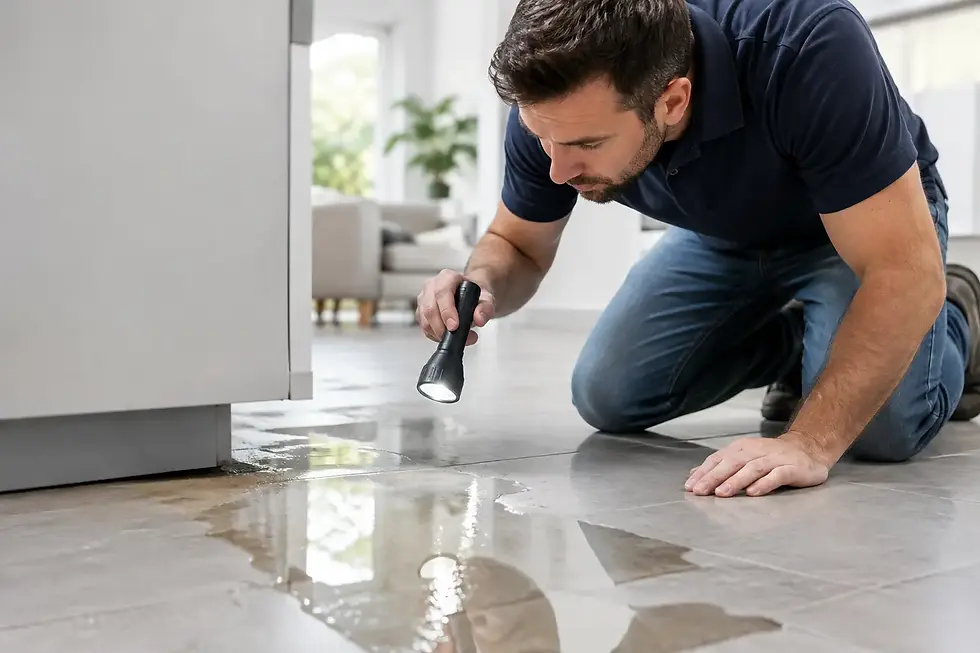
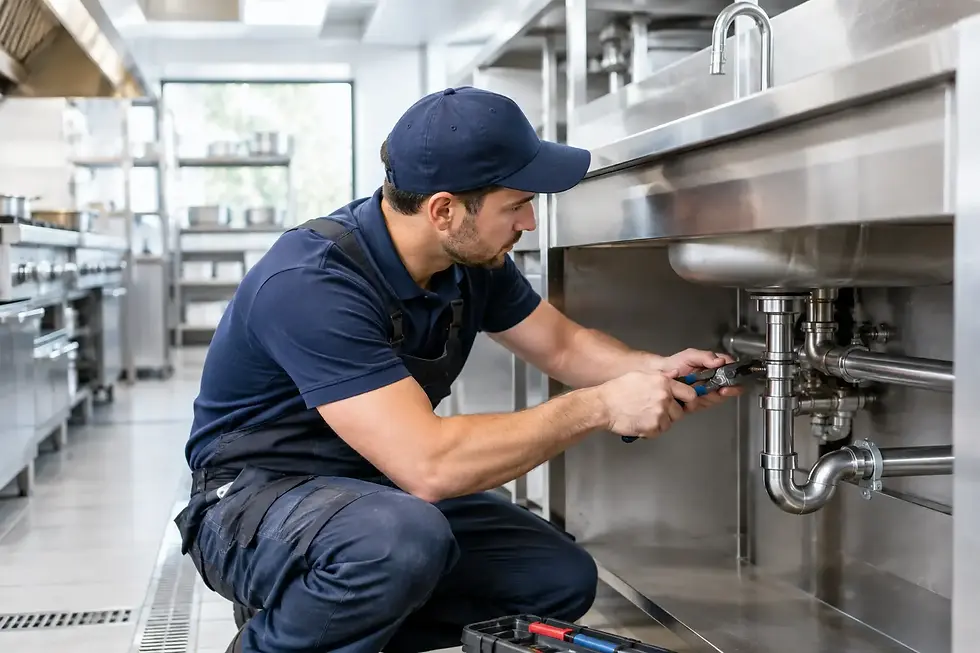
The right response begins with a reliable diagnosis, not a quick patch. A qualified plumber should identify whether the problem involves a supply line, drain line, fixture, appliance connection, or hidden pipe. Once the source is repaired, the affected area should be evaluated for moisture that may not be visible on the surface.
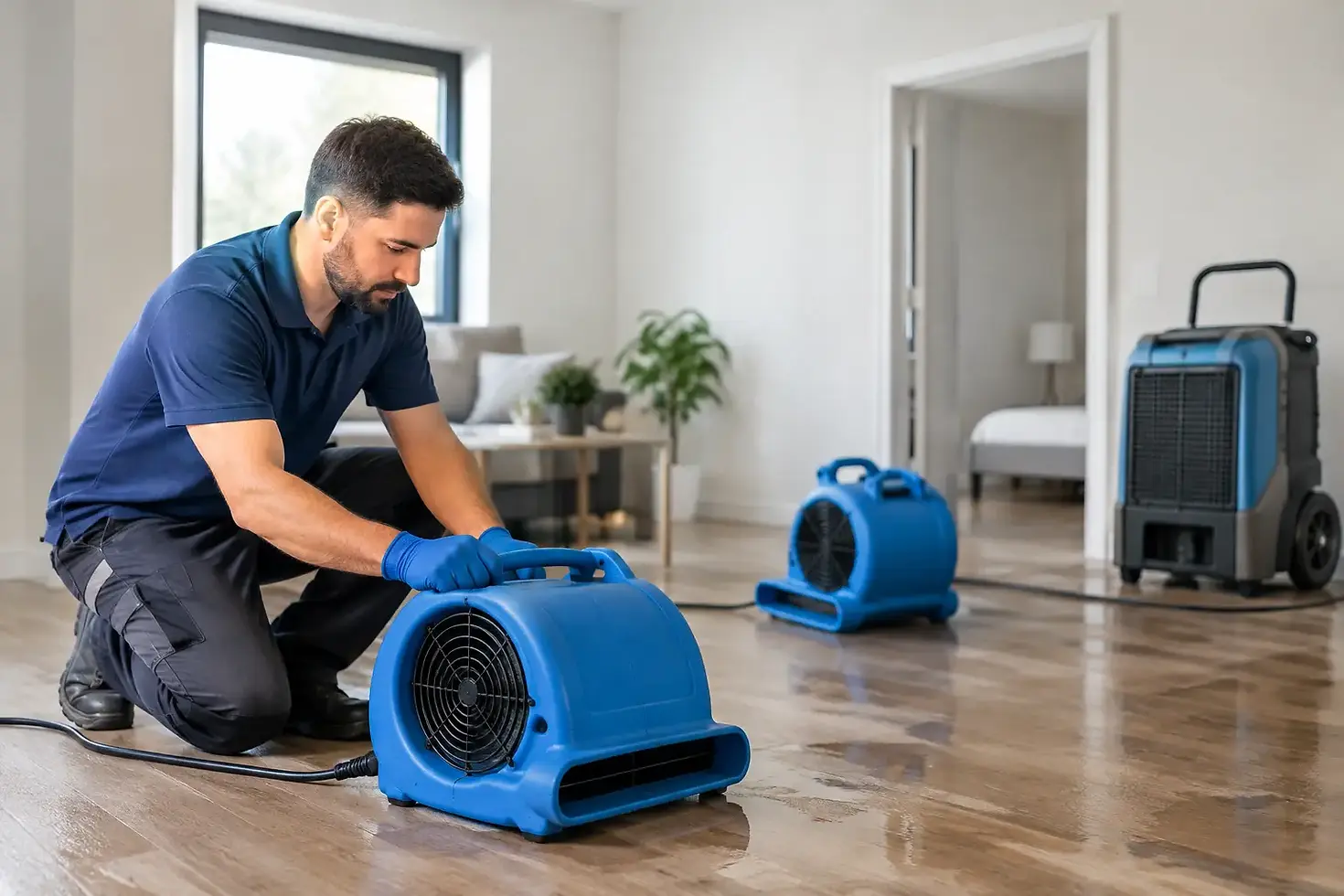
Restoration professionals may use moisture-reading tools, air movement, dehumidification, and controlled removal of damaged materials to dry the space properly. Not every leak requires extensive demolition. A small, short-lived leak caught quickly may only need targeted drying and minor repairs. A leak that ran unnoticed for days, reached several units, or affected porous materials usually calls for a more involved plan.
Communication matters just as much in an apartment building. The work may require access to more than one unit, coordination with management, and a clear record of what was found and repaired. That is why it helps to work with accountable professionals who can explain the cause, recommend the appropriate repair, and keep the process moving.
When to Call an Emergency Plumber
Call for emergency plumbing service when water is actively flowing, a ceiling is leaking, a toilet is overflowing and will not stop, a pipe has burst, or you have lost water due to a suspected plumbing failure. The same is true when a leak threatens electrical equipment, business operations, or another occupied unit.
Do not wait for regular business hours if the damage is spreading. A prompt repair can limit the amount of drying, cleanup, and reconstruction needed afterward. For Staten Island homeowners, landlords, and property managers, JV Mechanical provides professional plumbing service for urgent leak repairs and the straightforward communication needed during a stressful situation.
Preventing the Next Apartment Leak
Some leaks are sudden, but many give warning signs first. A cabinet that feels damp, a toilet that refills unexpectedly, recurring drain backups, water stains, peeling paint, musty odors, and higher water bills all deserve attention. Small warning signs are usually less disruptive and less expensive to address than a full water emergency.
Property managers can reduce risk by maintaining shutoff valves, checking appliance hoses, addressing slow drains, and responding quickly to resident reports. Unit owners and tenants can help by avoiding chemical drain cleaners, reporting moisture early, and knowing where local fixture shutoffs are located.
When water shows up where it does not belong, a fast, professional plumbing repair gives the restoration process its best chance to succeed. The goal is simple: stop the source, protect the building, and help everyone get back to normal with as little disruption as possible.

Comments