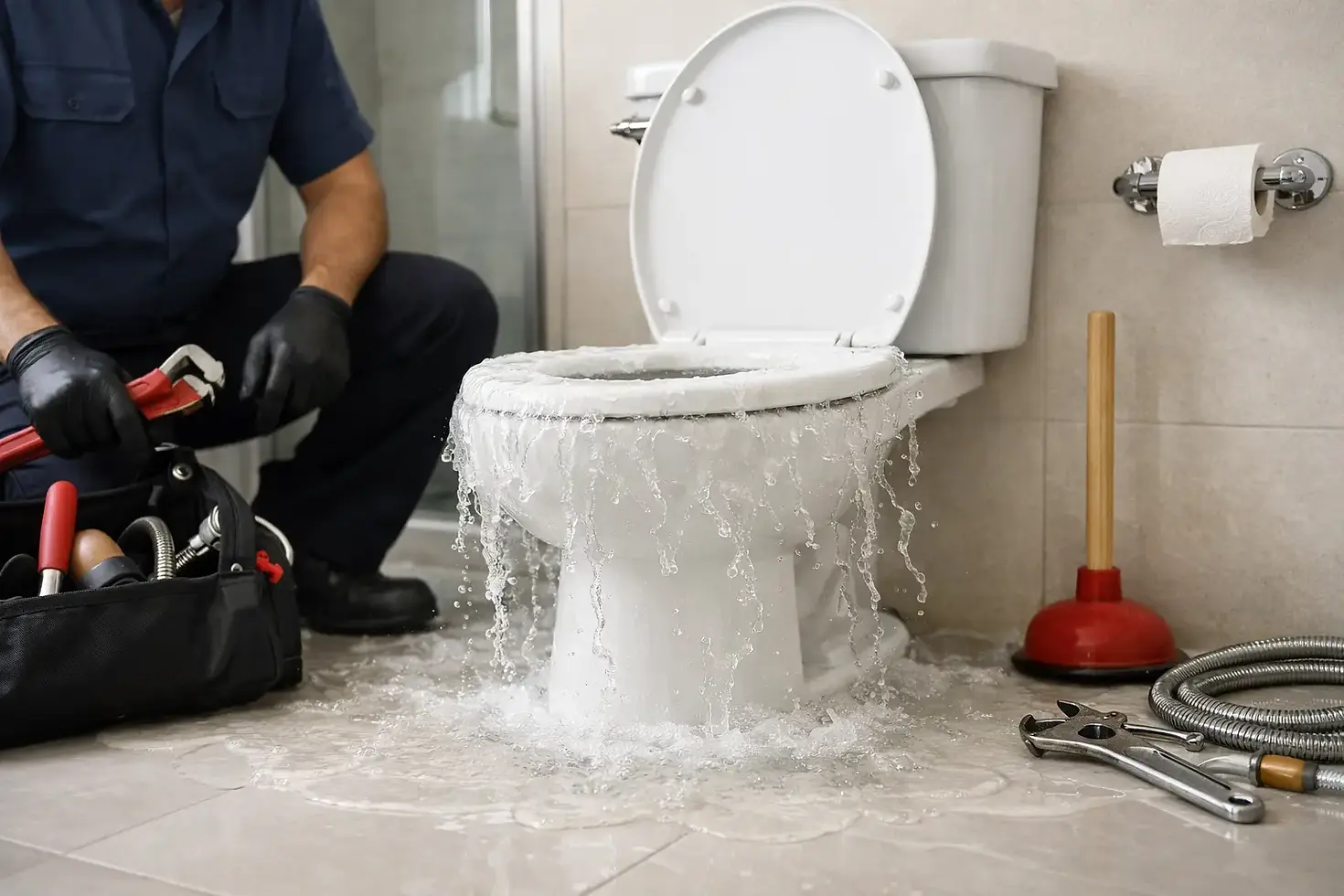
Toilet Overflowing? Call an Emergency Plumber
A toilet that starts overflowing can turn a normal day into a property emergency in minutes. When a toilet is overflowing, an emergency plumber is often the fastest way to stop the water, identify the blockage, and protect your home or business from avoidable damage. The right response is not to keep flushing or hope the water goes down. It is to contain the situation safely and get qualified help when the cause is not immediately clear.
For Staten Island homeowners, landlords, and business owners, a backup can be especially stressful because it can affect more than one bathroom, disrupt tenants or customers, and damage finished floors. Acting quickly gives a professional the best chance to resolve the problem before it becomes a larger drain or sewer-line repair.
What to Do the Moment a Toilet Overflows
Your first priority is stopping additional water from entering the bowl. Remove the tank lid and press the rubber flapper at the bottom of the tank closed if the toilet is still running. Then turn the shutoff valve behind or beside the toilet clockwise. This limits the supply of clean water to the fixture.
Do not flush again to test whether the clog has cleared. A second flush can send more water over the rim, even if the bowl level has started to fall. Keep children, pets, customers, and staff away from the area, especially if the overflow contains wastewater.
If it is safe to do so, place towels around the base of the toilet to keep water from spreading into adjacent rooms. Pick up only what you can contain without coming into contact with contaminated water. Avoid using household chemicals or drain cleaners in an overflowing toilet. These products rarely solve a serious toilet blockage and can create a hazardous situation for anyone working on the line later.
Once the water supply is off, take a moment to look for a simple explanation. A visible item lodged near the opening may explain the problem, but do not reach deep into the trap or remove the toilet yourself. If there is any uncertainty, call for professional service.
When a Toilet Overflowing Emergency Plumber Is Needed
A basic clog from excess paper may respond to a careful plunge, but an overflowing toilet is not always a basic clog. The situation calls for an emergency plumber when water continues rising, the toilet backs up repeatedly, or a plunger does not restore normal drainage.
You should also call promptly when more than one fixture is affected. A toilet that overflows while a shower, tub, or sink drains slowly can point to a blockage farther down the branch drain or in the main sewer line. In a multi-unit property or commercial space, that distinction matters. A problem beyond one toilet can affect several rooms and may require professional drain-cleaning equipment.
Other signs that should not wait include sewage odors, water coming up through a tub or shower drain, gurgling fixtures, a toilet that overflows without being flushed, or wastewater reaching flooring, walls, carpets, merchandise, or electrical areas. These are not situations to manage with repeated plunging.
After-hours timing is another reason to call. An overflow at night, on a weekend, or during a holiday does not become less damaging because regular business hours have ended. A responsive 24/7 emergency plumbing professional can assess the cause, clear the obstruction when possible, and advise you on cleanup and any needed next steps.
Why Toilets Overflow in the First Place
Most overflows begin with a blockage in the toilet trap or drainpipe. Excess paper, wipes labeled as flushable, paper towels, hygiene products, toys, and small objects can all restrict flow. Toilets are designed for wastewater and toilet paper only. Even products that move through one flush can accumulate farther down the line.
The cause can also be outside the bathroom. Older properties may have scale buildup, shifted piping, root intrusion, or a partial sewer-line blockage that makes the system drain slowly. Heavy use in a busy household, restaurant, office, or rental property can expose a developing issue faster than normal use would.
A plumbing professional does more than make the water disappear. The goal is to determine whether the issue is isolated to the toilet or connected to the building drain. That diagnosis helps prevent a repeat overflow a few days later, when the same obstruction or drain-line problem resurfaces.
Why DIY Fixes Have Limits
A properly used flange plunger can be useful for a minor, isolated clog. The key word is isolated. If the toilet has already overflowed, if the bowl stays high, or if other drains are involved, DIY efforts can delay the repair and increase cleanup costs.
A drain snake used incorrectly can scratch porcelain, damage the toilet trap, push an object farther into the line, or fail to reach the actual blockage. Chemical drain cleaners bring their own risks. They can sit in standing water, produce fumes, damage certain pipes, and leave caustic liquid behind when the toilet eventually needs professional service.
There is also a sanitation issue. Overflow water may contain bacteria and contaminants, particularly when the source is a drain or sewer backup rather than a tank that will not stop filling. Professional service helps address the plumbing cause while allowing you to make informed decisions about safe cleanup, flooring, and moisture damage.
What an Emergency Plumber Will Check
A qualified plumber will start by making the area safe and identifying where the backup is occurring. That may involve testing nearby fixtures, examining the toilet, and clearing a localized obstruction with the appropriate equipment. If the problem appears to be farther down the drain, the plumber can recommend the right method for restoring flow without guessing.
The repair approach depends on the cause. A toilet trap blockage may be resolved quickly, while a main-drain issue could require more extensive drain cleaning or further inspection. An honest assessment matters because no two overflows are exactly alike. A one-time clog in a guest bathroom does not call for the same solution as repeated backups throughout a property.
For commercial owners and property managers, clear communication is just as valuable as the repair itself. You need to know what caused the disruption, whether the line is functioning normally, and what maintenance or repair can reduce the chance of another emergency. JV Mechanical approaches emergency calls with that practical focus: control the immediate problem, explain the condition clearly, and perform work with professionalism and care.
Preventing the Next Overflow
Once the immediate issue is resolved, a few habits can reduce future trouble. Keep wipes, paper towels, cotton products, and other non-flushable items out of the toilet. In homes with young children, consider a closed-lid policy and keep small objects away from the bathroom. In rental units and businesses, simple signage can prevent many avoidable clogs.
Repeated clogs deserve attention even when they do not overflow. A toilet that needs frequent plunging is giving you an early warning. Scheduling drain service before the next backup can be less disruptive than dealing with wastewater on a bathroom floor during a busy morning or after closing time.
If your building has older plumbing, mature trees near a sewer route, or a history of slow drains, proactive maintenance may be worth discussing with a licensed and insured local plumber. The right recommendation depends on the property, the pipe condition, and the pattern of symptoms - not a one-size-fits-all sales pitch.
A toilet overflow is stressful, but quick action can keep it from becoming a major loss. Shut off the water, avoid another flush, keep people clear of contaminated water, and call a professional when the cause is anything more than a clearly minor clog. A calm, qualified response protects your property and gets daily life back to normal sooner.

Comments