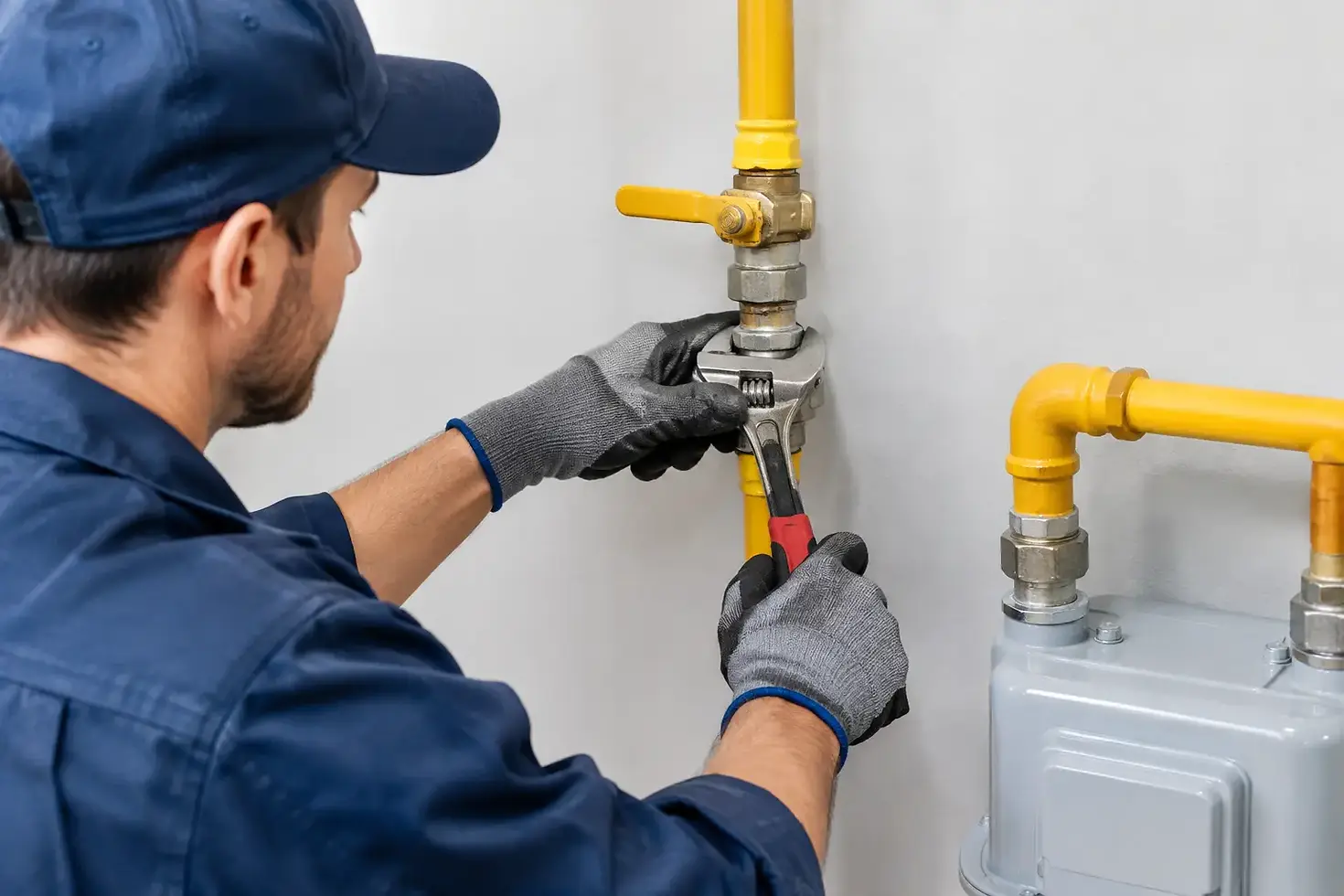
A Practical Guide to Gas Line Repairs at Home
A gas line concern is not a repair to put on a weekend to-do list. Whether you notice a sulfur-like odor near an appliance, hear a faint hissing sound, or find a gas meter behaving unexpectedly, this guide to gas line repairs starts with the priority that matters most: protect people and property first, then bring in a qualified professional to identify the cause.
Natural gas is an efficient fuel for heating, cooking, and hot water, but a damaged connection, aging pipe, or faulty appliance line can create a serious safety risk. Homeowners, landlords, and business owners do not need to diagnose the repair themselves. They need to recognize the warning signs, take the right immediate steps, and know when licensed service is required.
Treat a Suspected Gas Leak as an Emergency
Utility companies add a distinctive odorant to natural gas so leaks can be detected. Many people describe it as rotten eggs or sulfur. If you smell that odor inside your home, business, basement, or near the gas meter, assume it could be a leak until a professional says otherwise.
Leave the building promptly and take others with you, including pets. If you can do so without delay, leave doors open as you exit. Once you are at a safe distance, call 911, the gas utility's emergency line, or both as directed by local emergency guidance. Do not go back inside until authorities or qualified professionals say it is safe.
Do not turn lights, appliances, fans, or electrical switches on or off. Do not use a phone inside the building, light a match, smoke, start a vehicle nearby, or attempt to locate the source with a flame. Even a small spark can ignite accumulated gas.
A strong odor is not the only reason to act. A hissing or whistling sound near a line, bubbling water around an outdoor gas pipe, dead vegetation near a buried line, or an unexplained increase in gas usage may also require immediate investigation. If the situation feels urgent, treat it that way.
What Gas Line Repairs Can Involve
Gas piping systems are more complicated than the visible pipe behind a range or dryer. A repair may involve appliance shutoff valves, flexible connectors, black iron pipe, corrugated stainless steel tubing, fittings, regulators, exterior piping, or the meter connection area. The exact responsibility can also vary depending on whether the issue is on the utility side of the meter or the customer-owned side.
The repair itself depends on the cause. A technician may need to replace a worn valve, correct an improperly sized or damaged connector, repair a corroded section of pipe, tighten or replace approved fittings, reroute a line for an appliance change, or pressure-test a system before putting it back into service. In some cases, the safest option is replacing a section of aging piping rather than making a small patch repair.
That is why gas line work should not be approached as a simple hardware-store fix. The line must be compatible with the appliance load, installed to applicable code requirements, properly supported, tested for leaks, and restored without creating a new hazard elsewhere in the system.
Common Warning Signs Around Appliances
A visible connection behind a stove, water heater, boiler, dryer, or generator can make people feel confident that they have found the problem. Sometimes the concern is at the appliance connection. Just as often, the cause is elsewhere, including within concealed piping or at a valve that no longer seals correctly.
Pay attention to an appliance that will not stay lit, repeatedly shuts down, produces unusual odors, or has a flame that does not look normal. Yellow or orange burner flames can signal incomplete combustion, though the appliance and ventilation may be the issue rather than the gas line itself. Soot around an appliance, headaches or nausea experienced indoors, and activated carbon monoxide alarms also deserve prompt attention.
Carbon monoxide has no smell, so a carbon monoxide alarm is different from a natural gas concern. If a carbon monoxide alarm sounds, get everyone outside, call emergency services, and do not reenter until you are told it is safe. A qualified professional can then determine whether a fuel-burning appliance, venting problem, or another source is involved.
A Guide to Gas Line Repairs: What a Professional Checks
A proper service visit begins with safety and verification, not guesswork. The technician will assess the reported symptoms, inspect accessible lines and connections, and use appropriate leak-detection methods. They may check gas pressure, appliance operation, shutoff valves, regulators, and the condition of connected materials.
Testing matters because the apparent source is not always the actual source. For example, an odor near a boiler may be caused by a connection at the appliance, but it could also travel from another part of the piping system. A line that looks acceptable from the outside may still fail a pressure test or reveal corrosion at a fitting.
Once the issue is identified, the professional should explain what needs to be repaired, why that approach is recommended, and whether the work requires coordination with the utility or permits and inspections. For property owners, clear communication is part of a quality repair. You should understand the scope of the work before the system is returned to service.
Why DIY Gas Repairs Are a Poor Trade-Off
Some household repairs are reasonable for an experienced owner. Gas piping is not one of them. The risks extend beyond the immediate possibility of a leak. An incorrect fitting, overtightened connection, unsupported pipe, improper pipe material, or skipped pressure test can leave a hidden problem that becomes dangerous later.
There can also be code, insurance, and liability considerations. This is especially relevant for landlords, commercial property owners, and managers responsible for tenants, employees, or customers. A repair that seems less expensive upfront can become far more costly if it causes downtime, fails an inspection, damages equipment, or creates an unsafe condition.
The appropriate response is not to take apart the connection to see what is wrong. Keep the area clear and call a licensed and insured professional with gas-line experience. If the gas utility shuts off service because of a safety concern, do not attempt to restore it yourself. The system must be evaluated and safely returned to operation through the proper process.
Planning Work That Is Not an Emergency
Not every gas line service call begins with a leak. You may need professional help when replacing a range, converting to a gas dryer, installing a new boiler or water heater, adding an outdoor kitchen, or connecting a standby generator. These projects can require a new line, a larger line, or an evaluation of whether the existing gas supply can support the added demand.
This is where planning prevents frustrating delays. Tell the contractor which appliances are being added or replaced, their fuel requirements, and where they will be located. For commercial spaces, share anticipated equipment changes and operating needs. The right line size and layout depend on the total gas load, pipe run length, available pressure, and local requirements.
Older Staten Island properties can present additional considerations, from concealed piping and prior alterations to tight mechanical spaces. A local professional familiar with residential and commercial service work can assess the actual conditions rather than making assumptions from a floor plan or appliance label.
Questions Worth Asking Before Authorizing Work
When arranging gas line service, ask whether the contractor is licensed and insured, what testing will be completed after the repair, and whether permits or inspections apply. It is also reasonable to ask what caused the issue and whether nearby components show signs of wear that should be monitored.
For a non-emergency repair or installation, request a clear estimate that separates the recommended work from optional improvements. The lowest price is not always the best value if it leaves out testing, required materials, code-compliant installation, or proper restoration. A dependable contractor should be straightforward about scope, timing, and any conditions that could affect the final work.
Keep the System Safer Between Service Calls
You do not need to inspect or work on gas piping to be attentive. Keep the areas around boilers, water heaters, ranges, and dryers accessible. Avoid storing flammable products near fuel-burning equipment, and do not hang items from gas pipes or use them as supports. Make sure carbon monoxide alarms are installed and maintained according to manufacturer guidance and local requirements.
If an appliance begins operating differently, do not wait for it to fail completely. Early service can often address a worn connection, failing valve, or appliance issue before it disrupts heat, hot water, cooking, or business operations.
When there is any concern about a gas odor or a damaged line, choose caution over convenience. Get to safety first, contact emergency responders or the utility when appropriate, and let a qualified local professional handle the repair. That is the most reliable way to protect your property and get normal operations back on track.

Comments